Dye sublimation printing, embroidery and every other way we decorate

Every cutting, sewing and decoration process we run in house.

Every decoration method under our roof

No outside supplier handles any step, so your order never sits waiting in another company's queue.

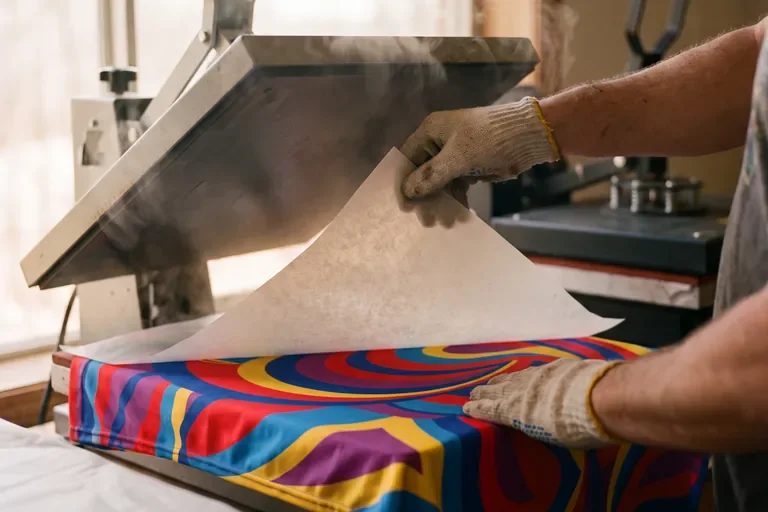
Dye sublimation

Dye sublimation

Ink is dyed into the fiber instead of sitting on top, so the print adds no weight and cannot peel or crack. Any number of colors, edge to edge.

Fabric must be 80%+ polyester
Screen printing

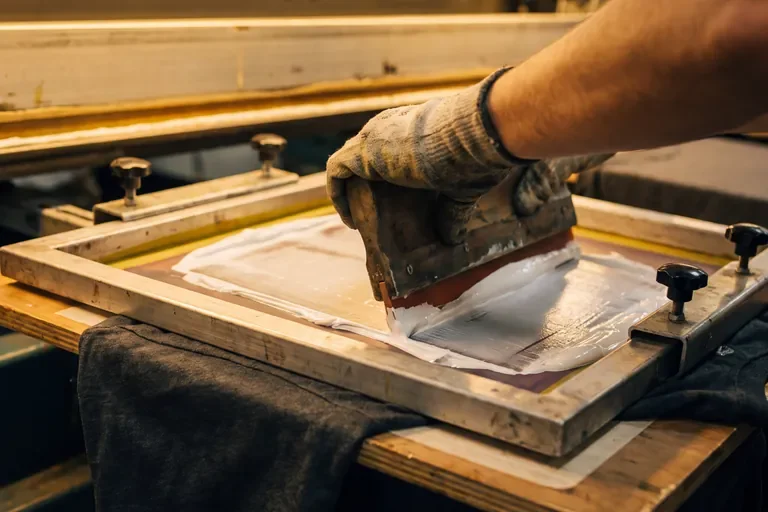
Screen printing

Solid, opaque color in plastisol or water-based ink that holds up through a whole season of laundry.

12 colors maximum
Embroidery

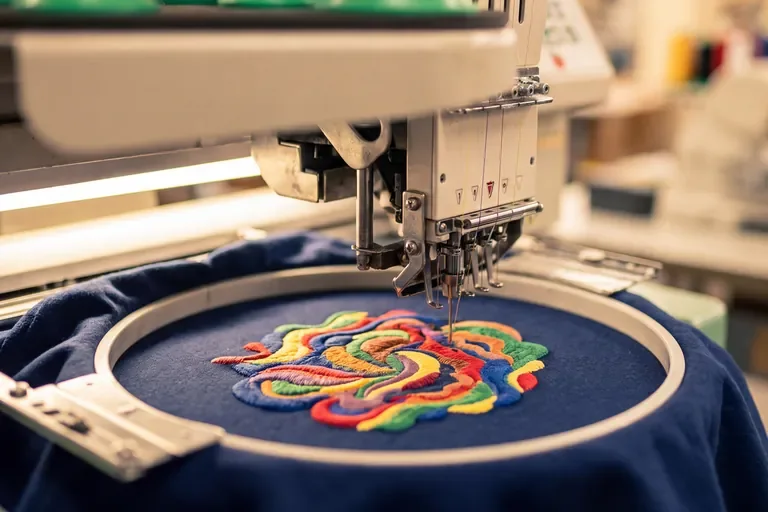
Embroidery

Choose flat, 3D puff, chenille or appliqué. Our team digitizes the logo in house and sends a stitched sample for you to approve.

15,000 stitches maximum
DTF & heat transfer

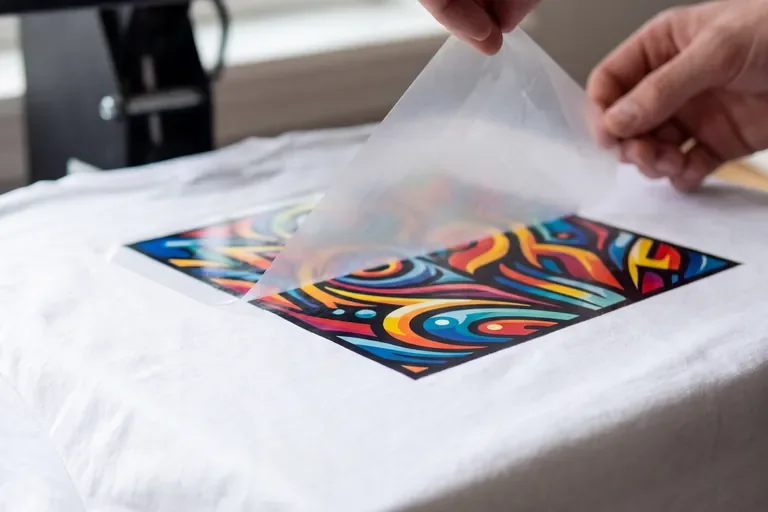
DTF & heat transfer

Fine photographic detail on cotton and blended fabrics. No screens to set up, so short runs stay affordable.

Works from one piece
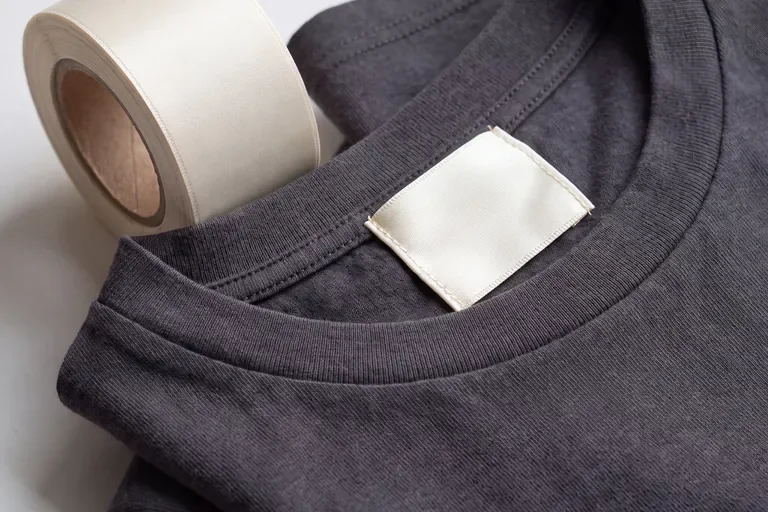
Woven & printed labels

Woven & printed labels

Neck, size, care and hem labels produced from your own artwork, so every detail carries your brand.

Matched to Pantone
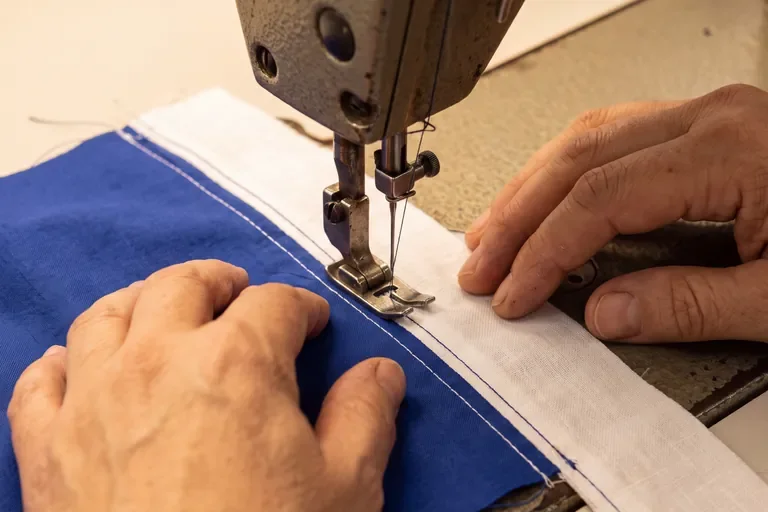
Cut-and-sew panelling

Cut-and-sew panelling

Color blocks are cut into the pattern itself rather than printed on a blank, so every seam lines up with the design.

No limit on panels

The right method for your artwork depends on the fabric beneath it, so compare these with weights and compositions in our fabric library. Garment shapes and graded measurements are in the size chart library, and the uniforms we produce for each sport are under all twelve sports we supply.

The methods in detail

Where each method works, where it does not, how much time it adds, and where it falls short. That final point carries the most weight: choosing the wrong method is the most frequent reason a uniform set underwhelms, and the choice is always locked in before cutting starts. None of these methods carries a minimum order.

Dye sublimation

Under heat, the ink becomes a gas and locks into the polyester fibers themselves. Because the print is part of the fabric rather than a coating on it, nothing can crack, peel, stiffen or add weight, and an edge-to-edge printed jersey weighs the same as an undecorated one.

Suitable fabrics
Polyester and blends that are at least 80% polyester. Cotton does not take it, and a 65/35 blend prints faded because the dye only bonds with the polyester content.
Color
Any number of colors for no added cost, printed right to the seams, with photographic fades and gradients. There is no white ink; white areas are simply the base fabric, so white cannot be printed onto a colored background.
Minimum order
None. Starts at one piece.
Largest decoration
Unlimited. We print the panels before cutting them, so a graphic can cover the entire garment and carry on across the seams.
Artwork required
Vector is preferred. Raster files work at a minimum of 150 dpi at finished size, in CMYK. Supply Pantone references for any color that needs to match another item.
Lead time impact
Adds no time. This is our standard method for team uniforms.
Weak points
It cannot be used on cotton or to print white on dark fabric, and once sublimated a garment cannot be re-dyed or have its shade corrected. The color is fixed when it prints.

Our usual pick for: custom soccer jerseys & uniforms, custom volleyball jerseys & uniforms, custom basketball jerseys & uniforms, custom wrestling singlets

Typical garments: crew-neck soccer match jerseys, sublimated team singlets and two-sided reversible basketball uniforms.

Screen printing

Each color is pressed through its own mesh stencil and then heat cured. The result is flatter, more solid color than any digital print can achieve, and on cotton it remains the most attractive and most durable choice available.

Suitable fabrics
Cotton, cotton blends and polyester, in any fabric color, since white and pale shades go down as actual ink instead of depending on the cloth underneath.
Color
As many as 12 spot colors, each matched to Pantone. Halftones can suggest gradients, but this is not where the method shines, and it is a poor choice for photographic images.
Minimum order
None. Because every color requires a separate screen, pricing is based on the number of inks and shown line by line in your quote.
Largest decoration
Body prints up to 40 x 50 cm. Prints on sleeves and cuffs are restricted by the platen to about 10 x 25 cm.
Artwork required
Vector files with every color separated onto its own layer, all fonts converted to outlines, and a Pantone number for each color. A flattened JPEG must be redrawn, which adds a day.
Lead time impact
A new design adds one to two days for making screens. Reprints from a screen we have kept add no time.
Weak points
Each extra color means another screen and another setup, so on 50 pieces a six-color design costs more per piece than sublimating the same artwork. Heavy ink on stretch fabric can crack when the garment is pulled well past the printed area.

Our usual pick for: custom baseball jerseys & uniforms, custom softball jerseys & uniforms, custom esports jerseys

Typical garments: cotton-rich esports merch hoodies and softball sun visors with a front script.

Embroidery

The design is sewn into the fabric with thread. Nothing else looks as premium, which is why crests, club badges and staff polos are nearly always embroidered, and the stitching will outlive the garment.

Suitable fabrics
Any material firm enough to support stitching, such as polos, fleece, caps, jackets, bags and heavyweight jerseys. Lightweight performance knits require a backing and can still pucker under a dense design.
Color
A design can use up to 15 thread colors, matched against Madeira or Isacord shade cards instead of Pantone. We run flat stitch, 3D puff, chenille and appliqué in our own facility.
Minimum order
None. Starts at one piece.
Largest decoration
Body panels up to 30 x 20 cm, cap fronts up to 12 x 6 cm, and up to 15,000 stitches before the next price tier applies.
Artwork required
A vector file or a sharp, high-resolution raster. We create the stitch file in house and send you a physical stitch-out to approve before production.
Lead time impact
Digitizing a new logo adds one day, and couriering the stitch-out to you instead of sending a photo adds two more.
Weak points
Detail finer than roughly 4 mm is lost in the stitching, small letters close up, and gradients cannot be stitched. Logos with lots of small text generally need simplifying, and you will hear that from us before digitizing starts, not afterward.

Our usual pick for: custom baseball jerseys & uniforms, custom rugby jerseys, custom hockey jerseys

Typical garments: full-button baseball tops with a stitched chest script, full-button softball jerseys and hooded hockey team parkas.

DTF and heat transfer

Artwork is printed on film, coated with adhesive powder, cured and heat pressed onto the garment. With no screens involved, piece one costs the same as piece one hundred, which makes small runs and single items practical.

Suitable fabrics
Cotton, blends, polyester and the majority of performance knits. No other method can put a photographic image onto a cotton T-shirt.
Color
Full color, white included, with gradients and photo-level detail on fabric of any color.
Minimum order
None. We use it to decorate individual names and numbers, replacement jerseys and sample garments.
Largest decoration
Each transfer can be up to 30 x 40 cm.
Artwork required
Vector, or a raster at 300 dpi at finished size on a transparent background. Small type stays crisp down to roughly 3 mm.
Lead time impact
A small batch of pieces can be done the same day.
Weak points
Because it sits on top of the fabric, you can feel it in a way you cannot feel a sublimated print, and after many hot washes the edges will start to lift. For a game jersey that has to survive a whole season of laundry, sublimation is the stronger choice.

Our usual pick for: custom flag football jerseys, custom esports jerseys, custom lacrosse uniforms

Typical garments: esports hoodies printed with DTF.

Woven and printed labels

Neck labels, care labels, size tabs, hem tags and hang tags are all produced from your artwork, so the finished product carries no trace of us. It is what separates a decorated blank from a garment that genuinely belongs to your brand.

Suitable fabrics
Woven labels in damask, satin and taffeta; printed labels in satin and tearaway; and heat-transfer neck prints if you prefer to go label-free.
Color
Woven labels take up to 8 colors, matched to Pantone. Metallic and fluorescent threads are an option.
Minimum order
None. The garment price already covers private labeling.
Largest decoration
Woven labels up to 8 cm wide. Hang tags in whatever size you specify.
Artwork required
Vector files with Pantone numbers. Details under 1 mm will not weave sharply.
Lead time impact
A first order takes an extra seven to ten days, since labels are woven at an outside mill and must be in hand before garments are finished. Repeat orders add nothing, because your label stock is held here.
Weak points
Of all the methods listed, this is the only one that truly lengthens a first run. Raise labels when you request the quote, not once the sample has been approved.

Our usual pick for: custom soccer jerseys & uniforms, custom basketball jerseys & uniforms

Every garment we make can carry them. See how a private label program runs.

Cut-and-sew panelling

The color blocking is part of the pattern itself, with every block cut as its own panel from its own fabric and then sewn in. Your design defines where the seams fall, instead of being printed over a generic blank.

Suitable fabrics
Any fabric in our stock, and different fabrics can be combined in a single garment, for example mesh side panels on a solid body, contrasting yokes, or a heavier weight across the shoulders.
Color
Unlimited panels, each with its own fabric and color, and any panel can be sublimated before sewing.
Minimum order
None. Starts at one piece.
Largest decoration
Does not apply, because the pattern itself is the design.
Artwork required
A tech pack or flat drawing that marks the seam lines. We make the pattern and send a fit sample before any bulk cutting.
Lead time impact
The pattern stage takes three to five extra days, and each garment needs more sewing time than a plain body.
Weak points
This is the most labor-heavy method on the list, so it costs more per piece than printing a similar look onto a single-piece body. It pays off when the design calls for genuine fabric changes, such as ventilation panels or contrast stretch inserts, not just the look of them.

Our usual pick for: custom hockey jerseys, custom football jerseys & uniforms, custom rugby jerseys

Typical garments: pro-cut football uniforms with spandex side panels, laced-collar hockey sweaters with a heavier yoke and full-zip baseball hoodies with contrast side panels.

Preparing your artwork

Vector files are best where you have them: AI, EPS, PDF or SVG, with all fonts converted to outlines and a Pantone reference for each spot color. Sublimation accepts raster artwork at 150 dpi or more at final print size, but it cannot be enlarged later without blurring at the edges. Twill and embroidery need outlined artwork, since stitch files are built from paths, not pixels.

Before cutting, you receive a digital mock-up showing placement and dimensions in centimeters, and for embroidery and twill we can produce a physical strike-off if you ask. Neither costs anything, and both earn back the two days they add.

Our FAQ answers artwork, reorder and color-matching questions, and files can come to us directly if you prefer to skip the form.

Ready for a price on your uniforms?

Share your artwork, how many you need and when you need them. Within one working day you will receive a costed quote along with our fabric recommendation.