Jersey material and sportswear fabrics, by weight and fiber

Our stocked fabrics, listed by fiber content, weight and the jobs each one suits best.

Gsm is the figure to watch, and it measures a compromise rather than quality. Lighter cloth breathes better and plays cooler; heavier cloth stands up to more abrasion and keeps its shape for longer. A 135gsm soccer jersey and a 320gsm rugby jersey are each right for their own game and each wrong for the other.

All of it is held in stock, with no minimum order on any fabric. Give us the sport, the climate and the lifespan you expect from the uniforms, and we will make a recommendation so you are not left guessing.

Fabrics we hold in stock

Eight fabrics that handle most of our production, each linked to the sports it is suited to.

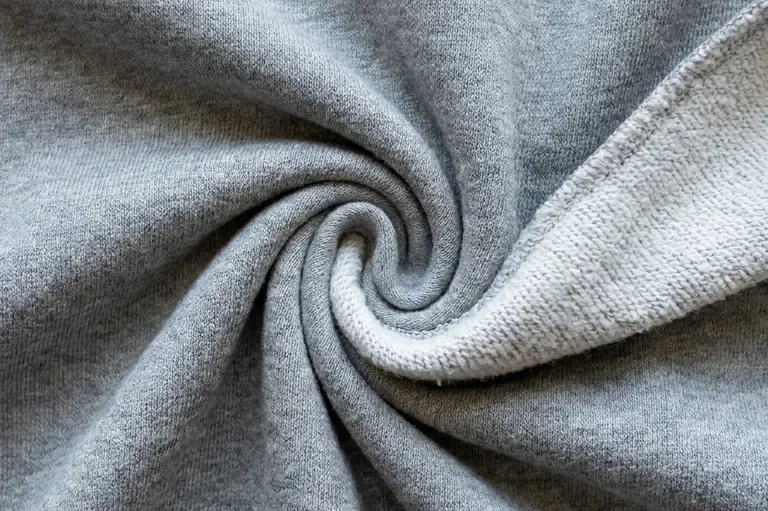
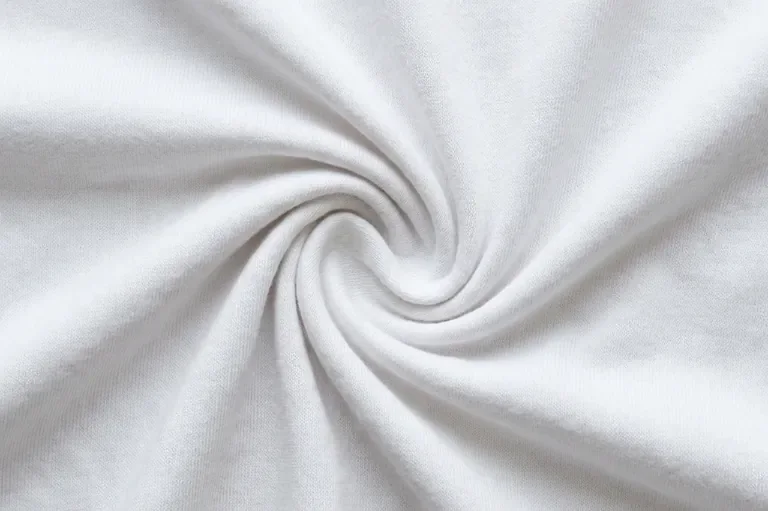
French terry fabric swatch in close-up

French terry

An unbrushed loop-back knit, lighter than fleece and suited to milder days.

Fiber content
80% cotton / 20% poly
Fabric weight
280 gsm
Ideal use
Hoodies, crews

In production for esports, basketball.

Used on lighter esports merch hoodies.

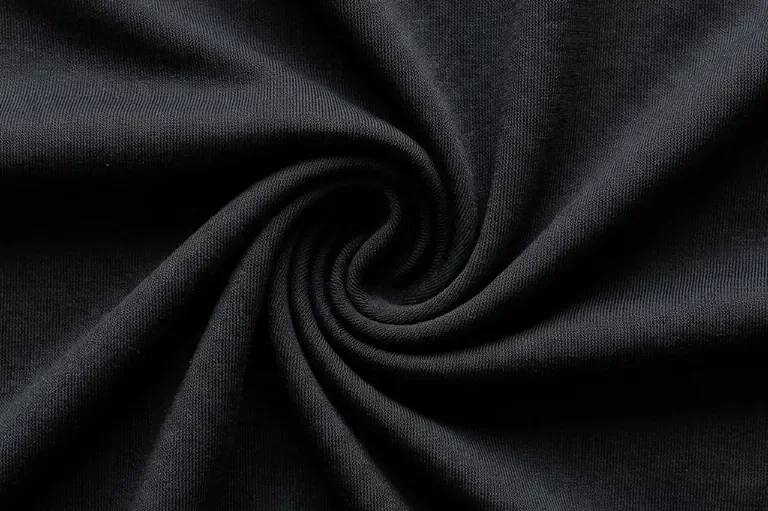
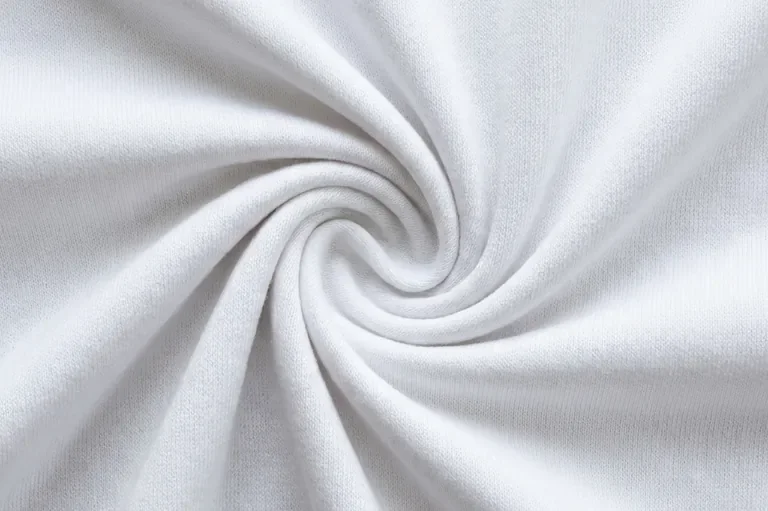
Cotton-rich single jersey fabric swatch in close-up

Cotton-rich single jersey

A natural-feeling knit for casual pieces that prints cleanly by screen or DTF.

Fiber content
95% cotton / 5% elastane
Fabric weight
180 gsm
Ideal use
Tees, tanks

In production for esports, flag football.

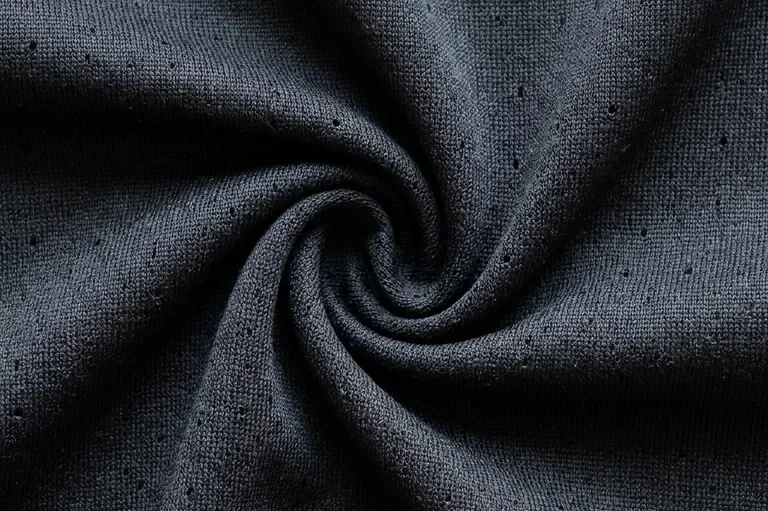
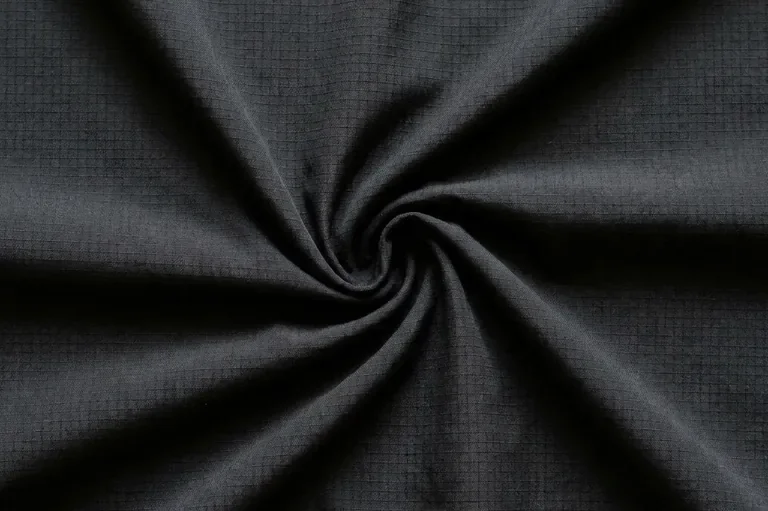
Ripstop softshell fabric swatch in close-up

Ripstop softshell

A bonded-back shell that resists wind, with seam taping as an option.

Fiber content
100% polyester
Fabric weight
300 gsm
Ideal use
Outerwear

In production for baseball, softball, rugby.

How to choose a fabric

Three answers settle most fabric choices: the sport, the climate it is played in, and how long the uniforms need to last. Start from the garment's job, then match the cloth to it.

  • Hot weather and constant running. Bird-eye mesh at 135 gsm is the open, breathable knit, which is why basketball and soccer tops sit at the light end of our range.
  • Full-color designs. Sublimation needs at least 80% polyester. Micro polyester interlock is 100% polyester with a smooth face, so it is our standard print base. A 65/35 blend prints faded, because the dye bonds only with the polyester.
  • Contact, grappling and compression. Poly-spandex jersey, 88% polyester and 12% elastane at 220 gsm, stretches four ways and springs back, so a tight fit survives repeated washing.
  • Warm-ups and travel. French terry at 280 gsm suits milder days, and brushed fleece at 380 gsm is the winter weight. Both are cotton-rich, so logos go on by embroidery, screen print or DTF rather than sublimation.
  • Wind and wet sidelines. Ripstop softshell is a 300 gsm bonded-back shell that resists wind, with seam taping as an option.

Think about laundry too. Polyester holds its dimensions, while cotton-rich blends can change by two to three percent on the first hot wash, which our patterns allow for. Washing cold and hanging to dry avoids the problem with both.

Fabric weights by sport

Taken from the specifications of a core garment in each sport, lightest first. Each garment links to its full product page.

Fabric and weight used for a core garment in each sport
Sport Garment Fabric and weight
Basketball V-neck game uniform sets 130-150 gsm polyester micromesh or bird-eye
Soccer Crew-neck match jerseys 135-150 gsm bird-eye or interlock
Flag Football Sleeveless V-neck jerseys 140 gsm polyester
Baseball Two-button placket jerseys 140-160 gsm micro-polyester interlock
Lacrosse Sleeveless men's pinnies 150 gsm polyester mesh
Esports Long-sleeve player jerseys 160-180 gsm matte polyester
Volleyball Long-sleeve match jerseys 180-200 gsm poly-spandex
Football Pro-cut game uniforms 200-240 gsm polyester, spandex panels
Wrestling Sublimated team singlets 220-240 gsm poly-spandex
Hockey Laced-collar home sweaters 220-260 gsm air-knit polyester
Softball Full-length game pants 240 gsm double-knit polyester at seat and knee
Rugby Button-collar match jerseys 280-320 gsm tight-weave poly or poly-cotton

Need something else?

Custom knitting or dyeing to your specification is possible and adds about two weeks to sampling. Send a swatch or a written spec, and you will know the cost before committing to anything.

Most of the jersey range also comes in recycled polyester. It performs the same as virgin polyester at a modest premium, and we quote both side by side so you can judge the difference yourself.

Match the decoration to the fabric

Some methods only suit some fabrics. Dye sublimation requires at least 80% polyester, which rules out our cotton-rich jersey, while screen print and DTF both work on it. Compare decoration methods against each fabric.

Ready for a price on your uniforms?

Share your artwork, how many you need and when you need them. Within one working day you will receive a costed quote along with our fabric recommendation.